60 Years of International Literacy Day: How Far Has Adult Literacy Come, and Where Does NEP 2020 Take India Next?
"The highest education is that which does not merely give us information but makes our life in harmony with all existence." - Rabindranath Tagore said this long before the world had a word like "literacy rate."
A Day That Turns 60
On 8 September 2026, International Literacy Day marks its 60th anniversary. UNESCO first proclaimed the day in 1966, and the world observed it for the first time in 1967. Six decades later, the day still asks the same question it always has: has the promise of literacy reached everyone it was meant for?
This year's global theme, "Literacy for People, Planet and Prosperity," widens that question. Reading and writing are no longer treated as school-only skills. UNESCO now links literacy to numeracy, digital understanding, and the everyday decisions people make about their health, their rights, and their livelihoods. And yet, UNESCO estimates that at least 739 million adults worldwide still cannot read or write a simple sentence. Sixty years on, the work is far from finished.
India's Own Literacy Story
India's numbers tell a story of real, hard-won progress. From a literacy rate of 74.04% at the 2011 Census, the country has climbed to an estimated 80.9%, finally crossing the 80% mark. Youth literacy, among those aged 15 to 24, stands even higher at close to 97.34%, a clear sign that the next generation is reading a very different India than their grandparents did.
But averages hide gaps. Rural literacy still trails urban literacy by more than 11 percentage points, and the gap between male and female literacy, though narrowing, remains close to 13 points. These are not just numbers on a chart. They are the difference between a mother who can read her child's report card and one who cannot, between a farmer who can check a government scheme online and one who has to depend on someone else to do it for him.
NEP 2020: A Roadmap, Not Just a Policy
This is exactly the gap the National Education Policy 2020 was written to close. Beyond reforming schools, NEP 2020 set a clear national target: universal foundational literacy and numeracy by 2025, and full adult literacy soon after. It gave rise to the ULLAS – Nav Bharat Saaksharta Karyakram, India's new adult education programme, which leans on volunteers and digital tools to reach the estimated crores of adults who missed school altogether. The results are visible. Several states and Union Territories, including Ladakh and Uttarakhand, have already crossed the 95% functional literacy mark and been declared fully literate.
NEP 2020 also pushed the idea that literacy cannot stop at reading and writing. It has to include digital literacy, financial literacy, and vocational skills that actually help someone earn a living. That is the same philosophy India Humanity Foundation has built its own adult literacy work around.
Where IHF Stands on This Journey
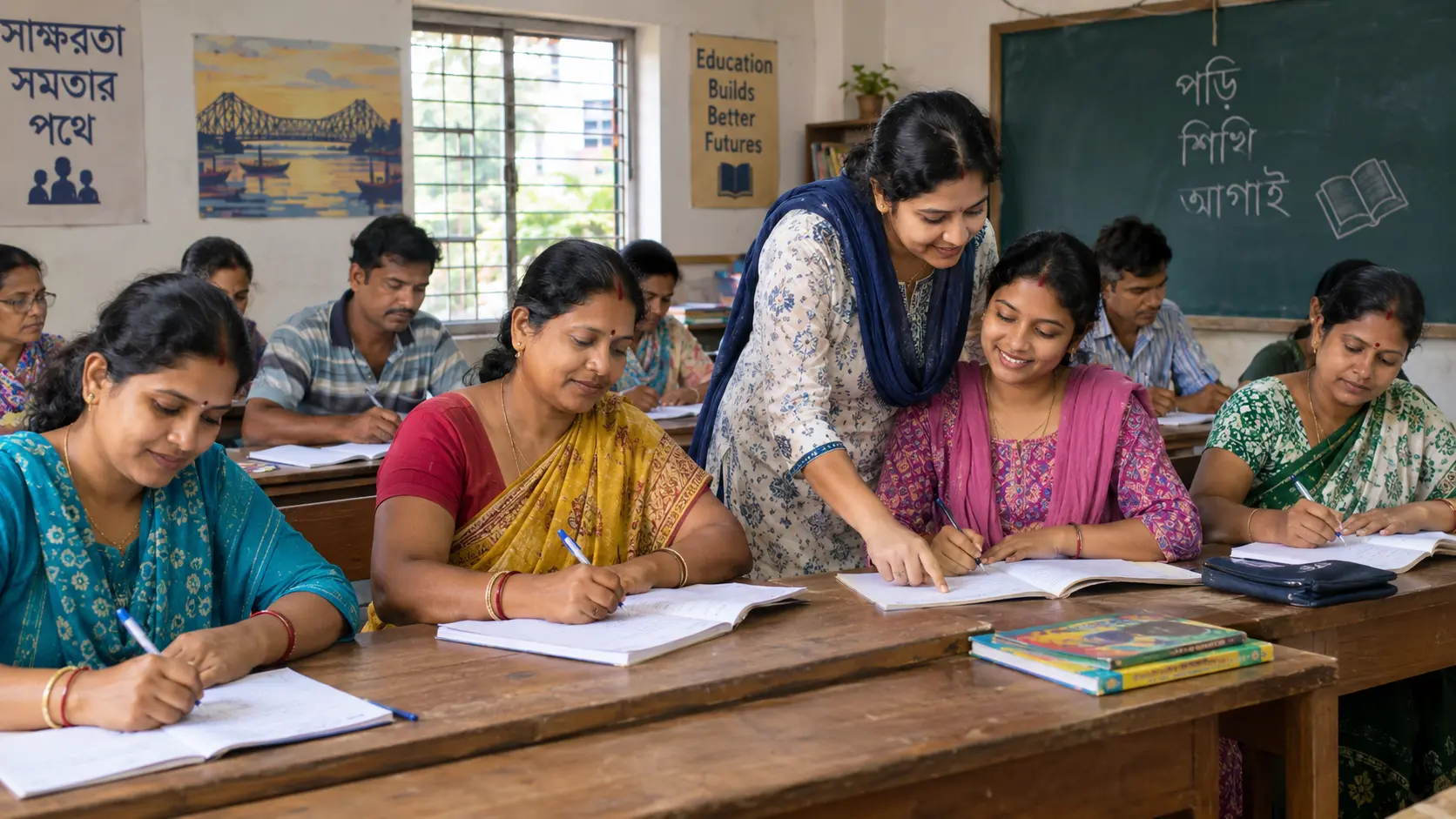
At India Humanity Foundation, International Literacy Day is not a once-a-year observance. It is a reminder of why our adult literacy program, community reading circles, and skill-linked learning sessions run through the year in the communities we serve across Kolkata and beyond. We have seen, up close, what happens when a woman signs her own name for the first time, or when a daily-wage worker reads a bus route sign without asking a stranger for help. These are small moments with a large ripple effect.
As India moves toward the goals set out in NEP 2020, IHF remains committed to standing at the last mile, in the classrooms, courtyards, and community centres where the real work of literacy happens. Sixty years after the world first marked this day, our promise is simple: every person we reach should leave a little more capable of shaping their own future.